






Heat dissipation solution for wind power inverter
03月31日
With the enhancement of environmental awareness and the demand for renewable energy, the technology of wind power generation has attracted increasing attention. Due to the instability and randomness of wind energy, the power generated by wind turbines is a random alternating current of voltage and frequency. It is necessary to take effective power transformation measures to send wind power into the power grid. In order to improve the operational performance of wind power generation system, a variable speed wind power generation system based on AC to DC converter has been developed in recent years.
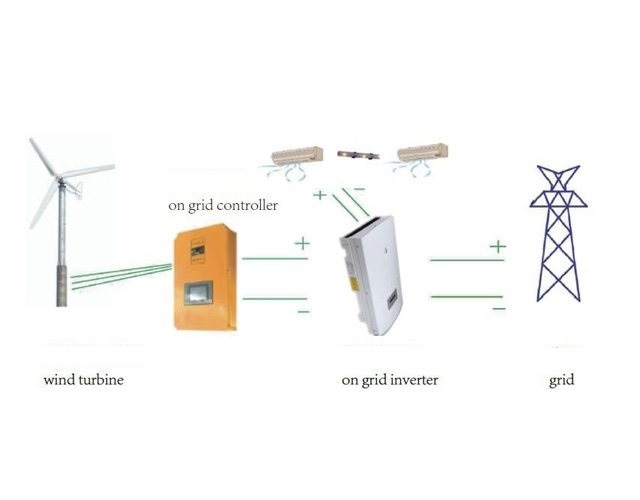
In the AC - DC - AC variable speed wind power generation system, the control technology of the inverter is the key. The inverter directly uses the voltage synchronization signal of the power grid as the tracking signal of the output current of the inverter, which can make the output current track the voltage of the grid quickly. Inverters are used in solar power facilities to convert direct current generated by solar panels into alternating current that can be used in power grids. These two applications are faced with severe cooling challenges that require complex thermal management solutions, and become increasingly difficult as power density increases.
Under the condition that the existing heat dissipation can not be satisfied, the reform of heat dissipation technology is becoming more and more serious. Liquid cooling technology as a new type of heat dissipation technology has also attracted more and more attention from experts. Water cooling has a quiet, sustainable, high cooling rate and other characteristics, in addition to the common use of computer heat dissipation, but also widely used in power, medical, led and other industries, can be said that water cooling has gradually penetrated into the vast majority of heat dissipation.

 WeChat
 RSS
RSS Chinese
  English